Generational and Geographic Influences on Online Card Game Community Evolution
Written by Morgan Koch · Aug 3, 2026

Generational and Geographic Influences on Online Card Game Community Evolution
Online card game communities have experienced measurable shifts driven by age distributions and geographic concentrations, with data tracking these patterns through 2026. Researchers have documented how younger cohorts cluster around mobile formats while older participants maintain steady engagement in established desktop environments, and these trends vary sharply by region.
Age-Based Participation Patterns
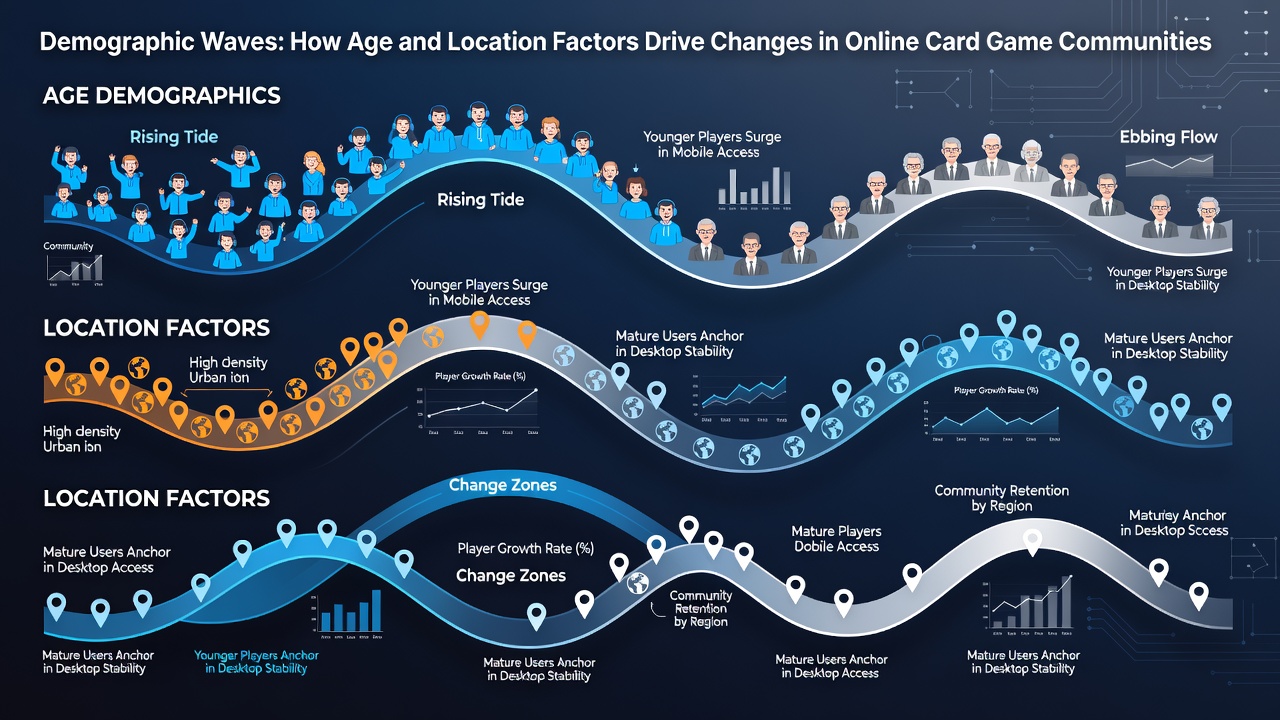
Players aged 18 to 34 represent the largest segment in many digital card environments, according to aggregated platform metrics released in mid-2026, yet their session lengths tend to run shorter than those recorded among users over 45. Data shows this younger group favors quick-stakes tables and integrated social features, while older demographics concentrate on structured tournaments that reward accumulated experience. Observers note that location compounds these differences, since urban centers with high-speed infrastructure support higher volumes of mobile play compared to rural zones where desktop access dominates.
Studies from the University of Nevada Reno indicate that generational preferences also shape game selection, with participants in their twenties gravitating toward variants that blend elements of chance and strategy in rapid succession, whereas those in their fifties and beyond show consistent preference for classic formats. These patterns hold across multiple continents, though the pace of adoption differs.
Regional Variations in Community Composition
North American markets display distinct geographic clustering, with coastal states reporting elevated participation from users aged 25 to 40, while midwestern regions sustain stronger representation among players over 50. Similar divides appear in European data, where northern countries record higher mobile engagement among younger adults compared to southern regions that retain larger shares of desktop-based older users. Australian regulatory summaries released in August 2026 highlighted parallel trends, noting that metropolitan areas drive most new registrations in the under-30 category while regional populations contribute disproportionately to established community forums.
These location factors influence not only player counts but also the types of interactions that emerge. Communities in densely populated areas tend to develop faster turnover in group formations, whereas those anchored in less urban settings maintain longer-term member retention across age brackets.
Community Feature Adaptations
Platform operators have responded to these demographic waves by adjusting interface options and tournament structures, though the effectiveness of such changes varies by audience. Younger players in high-density urban zones often utilize customization tools at higher rates, while older participants in suburban and rural locations show stronger engagement with moderated discussion boards. Figures from industry tracking services reveal that communities balancing both age groups sustain broader activity levels throughout the year.
What's interesting is how these shifts affect moderation practices and event scheduling, since time-zone differences across regions require staggered programming to accommodate mixed demographics. Data compiled through August 2026 shows consistent growth in hybrid events that combine quick formats attractive to younger users with deeper strategic elements preferred by older cohorts.
Future Trajectories Based on Current Metrics
Current projections derived from enrollment and retention statistics suggest continued divergence along age and location lines, with mobile-centric growth concentrated among younger urban populations and stable desktop communities persisting in established regional strongholds. Those who've analyzed longitudinal datasets emphasize that these patterns emerge gradually rather than through abrupt transitions, allowing operators time to calibrate offerings accordingly. Evidence from multiple reporting periods confirms that location-based infrastructure remains a primary driver alongside generational habits in determining overall community composition.
Conclusion
Demographic waves continue to reshape online card game communities through the interplay of age distributions and geographic factors, with measurable impacts on participation styles, feature adoption, and regional retention rates. Data collected into 2026 provides clear documentation of these ongoing adjustments across platforms and markets.